
Freelancing has become one of the fastest-growing career paths in the digital world. From students to professionals, many people are choosing freelance work for flexibility, independence, and income opportunities. But to succeed, you need a clear freelancing view—a proper understanding of how the freelance ecosystem works, what skills are in demand, and how to build a sustainable career.
This article explains the complete freelancing view in a simple and practical way so beginners can start confidently.
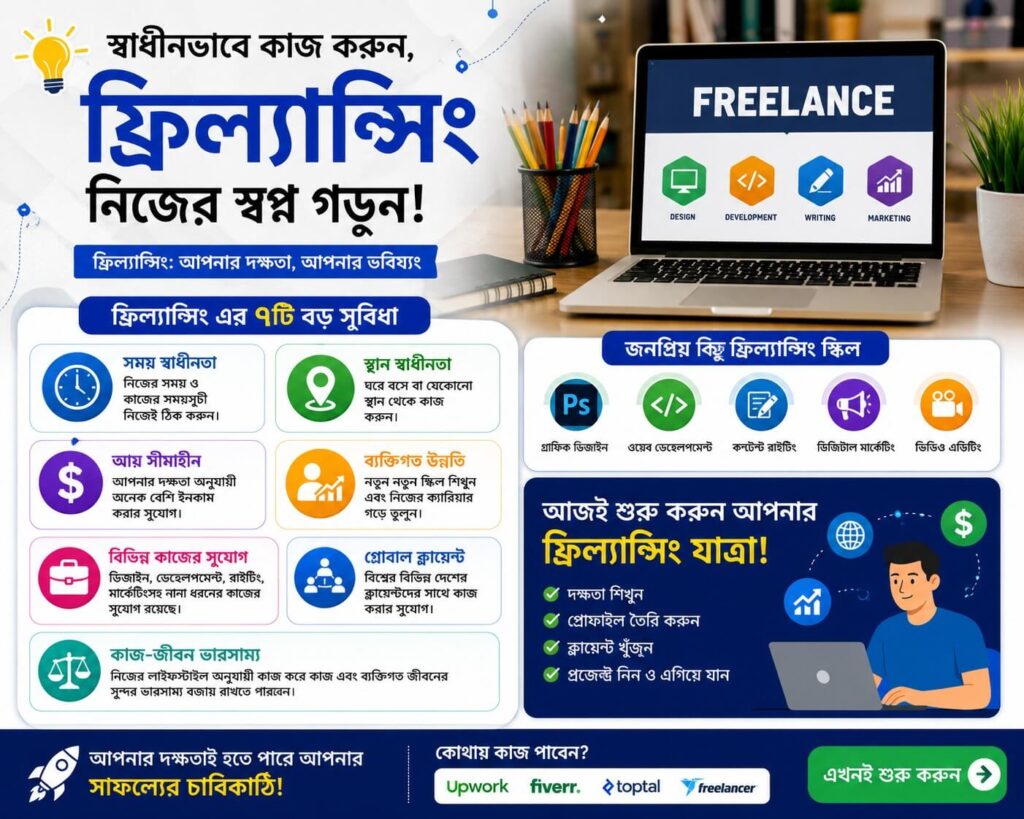
What is Freelancing View?
A freelancing view means your overall understanding of the freelance industry, including:
- How freelancing works
- Where clients come from
- Which skills are profitable
- How income is generated
- What challenges freelancers face
- How to grow long-term in this career
In simple terms, it is the “big picture” of freelancing before starting your journey.
Without a clear freelancing view, beginners often get confused, lose motivation, or choose the wrong skills.
Why Freelancing is So Popular in 2026
Freelancing is growing rapidly because of digital transformation and remote work culture. Here are the main reasons:
1. Work from Anywhere
You can work from home, office, or even while traveling. Only a laptop and internet are needed.
2. Global Client Market
Freelancers are not limited to local jobs. You can work with clients from the USA, UK, Canada, Australia, and more.
3. Flexible Time
Unlike traditional jobs, freelancing allows you to set your own schedule.
4. Unlimited Income Potential
Income depends on skills and experience. Skilled freelancers often earn more than regular job holders.
5. Low Startup Cost
You don’t need a big investment—only skill development is required.
Types of Freelancing Work
Understanding different types of freelancing helps improve your freelancing view.
1. Web Development
- WordPress
- Laravel
- Shopify
- Custom website design
2. Graphic Design
- Logo design
- Branding
- Social media posts
- Banner design
3. Digital Marketing
- SEO
- Facebook ads
- Google ads
- Email marketing
4. Content Writing
- Blog writing
- Copywriting
- SEO articles
5. Video Editing & Animation
- YouTube editing
- Motion graphics
- Reels and ads
6. Data Entry & Virtual Assistance
- Admin support
- Excel work
- Customer support
Skills Needed for a Strong Freelancing View
To build a successful freelancing career, you need both technical and soft skills.
Technical Skills
- One strong freelance skill (design, development, writing, etc.)
- Basic computer knowledge
- Use of online tools and platforms
Soft Skills
- Communication
- Time management
- Client handling
- Problem solving
- Negotiation skills
A balanced freelancing view always includes both skill types.
How Freelancing Platforms Work
Most freelancers get clients from online marketplaces like:
- Fiverr
- Upwork
- Freelancer
- PeoplePerHour
Simple Process:
- Create profile
- Upload portfolio
- Send proposals or gigs
- Get hired
- Complete project
- Get paid
Understanding this process improves your freelancing view and helps avoid confusion.
Income Structure in Freelancing
Freelancing income is not fixed. It depends on:
- Skill level
- Experience
- Client type
- Project complexity
Beginner Level:
$50 – $300/month
Intermediate Level:
$300 – $1500/month
Expert Level:
$1500 – $5000+ per month
A realistic freelancing view helps you understand that success takes time and consistency.
Common Challenges in Freelancing
A balanced freelancing view also includes challenges:
1. Finding First Client
Beginners often struggle to get their first job.
2. High Competition
Many freelancers compete for similar work.
3. Income Instability
No fixed salary every month.
4. Client Communication Issues
Miscommunication can lead to disputes.
5. Skill Upgrading Pressure
You must constantly learn new tools and trends.
How to Build a Strong Freelancing Career
If you want a successful freelancing journey, follow these steps:
Step 1: Choose One Skill
Don’t learn everything at once. Focus on one skill.
Step 2: Practice Daily
Build real projects, not just theory.
Step 3: Create Portfolio
Show your work on a website or freelance profile.
Step 4: Start Small
Take small projects to gain experience.
Step 5: Improve Communication
Clear communication builds trust with clients.
Step 6: Keep Learning
Update your skills regularly.
Future of Freelancing
The future of freelancing looks very strong. AI, remote work, and global outsourcing are increasing opportunities.
Future Trends:
- AI-assisted freelancing tools
- More remote global jobs
- Higher demand for digital skills
- Growth of niche freelancers
- Automation + human creativity balance
A modern freelancing view shows that freelancing is not just a side job anymore—it is a full-time career path.